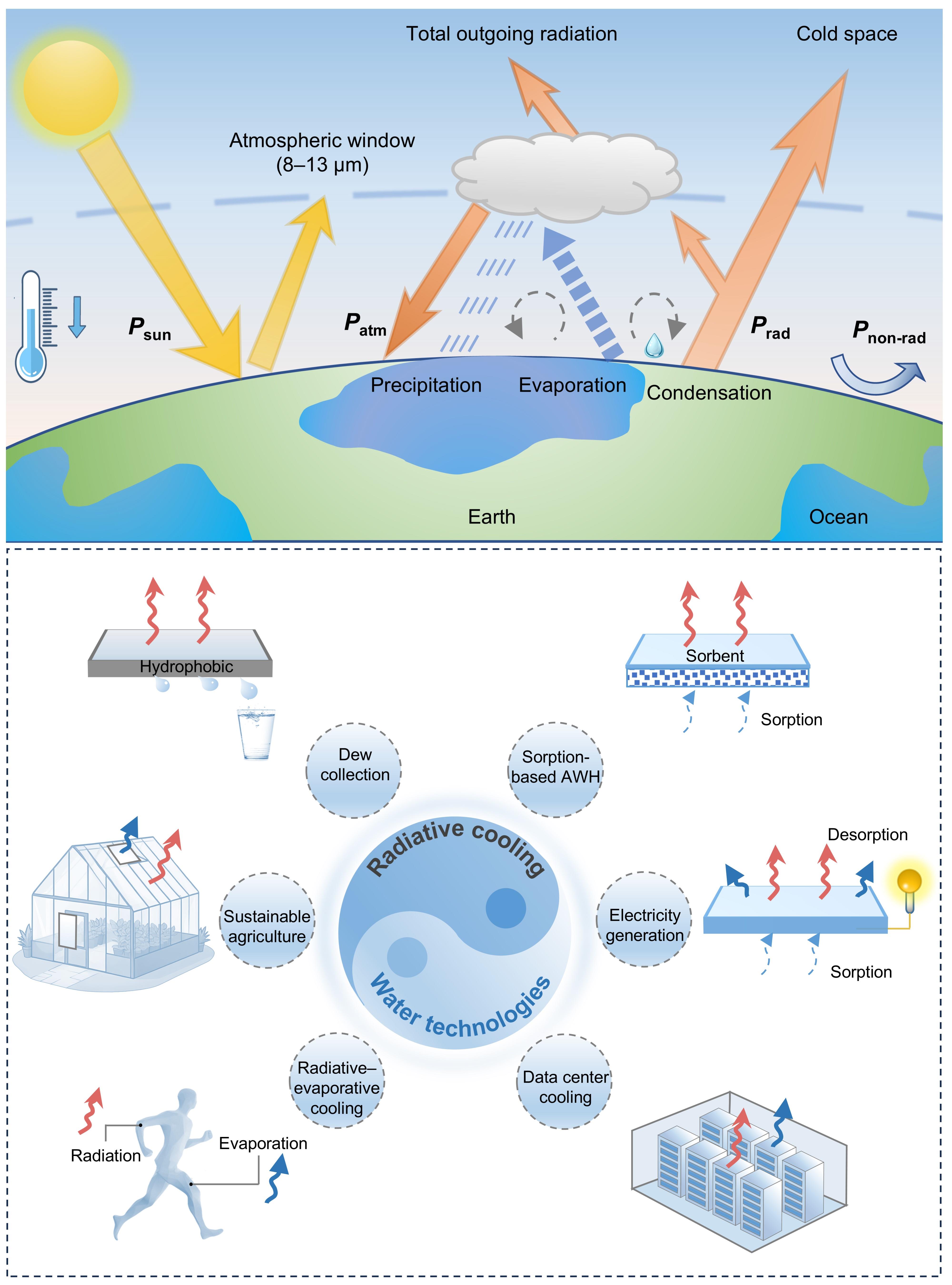
In this review, Qiaoqiang Gan and co-workers examine the emerging nexus between passive subambient radiative cooling and sustainable water technologies. The work discusses how radiative cooling can dissipate heat into outer space without external energy input, while highlighting its strong dependence on realistic atmospheric conditions, particularly humidity, cloud cover, and sky transparency.
Led by co-first authors Sunmiao Fang and Saichao Dang, the review explores the integration of radiative cooling with atmospheric water harvesting, sustainable agriculture, and radiative–evaporative cooling. It further identifies opportunities in emerging applications such as water-enabled electricity generation and data-center thermal management.
The authors provide a forward-looking roadmap for translating these synergistic cooling–water concepts into practical systems, emphasizing scalable manufacturing, outdoor durability, cost-effectiveness, and system-level integration. This work establishes a broad framework for simultaneously addressing growing cooling demand and water scarcity under a warming climate.
In this review, Qiaoqiang Gan and co-workers provide a comprehensive overview of radiative cooling (RC) technologies, highlighting their transition from laboratory concepts to real-world applications. The work discusses how engineered materials and system designs can effectively dissipate heat into outer space through the atmospheric transparency window, enabling passive cooling without energy input.
The authors summarize key developments across multiple application scenarios, including building thermal management, personal cooling, and photovoltaic temperature regulation. They further analyze the major challenges that currently limit large-scale deployment, such as material durability, environmental adaptability, and economic feasibility.
This review offers a forward-looking perspective on bridging the gap between fundamental research and practical implementation, emphasizing the importance of scalable manufacturing, system-level integration, and interdisciplinary collaboration for advancing radiative cooling technologies.
Link: https://doi.org/10.1038/s44359-025-00041-5

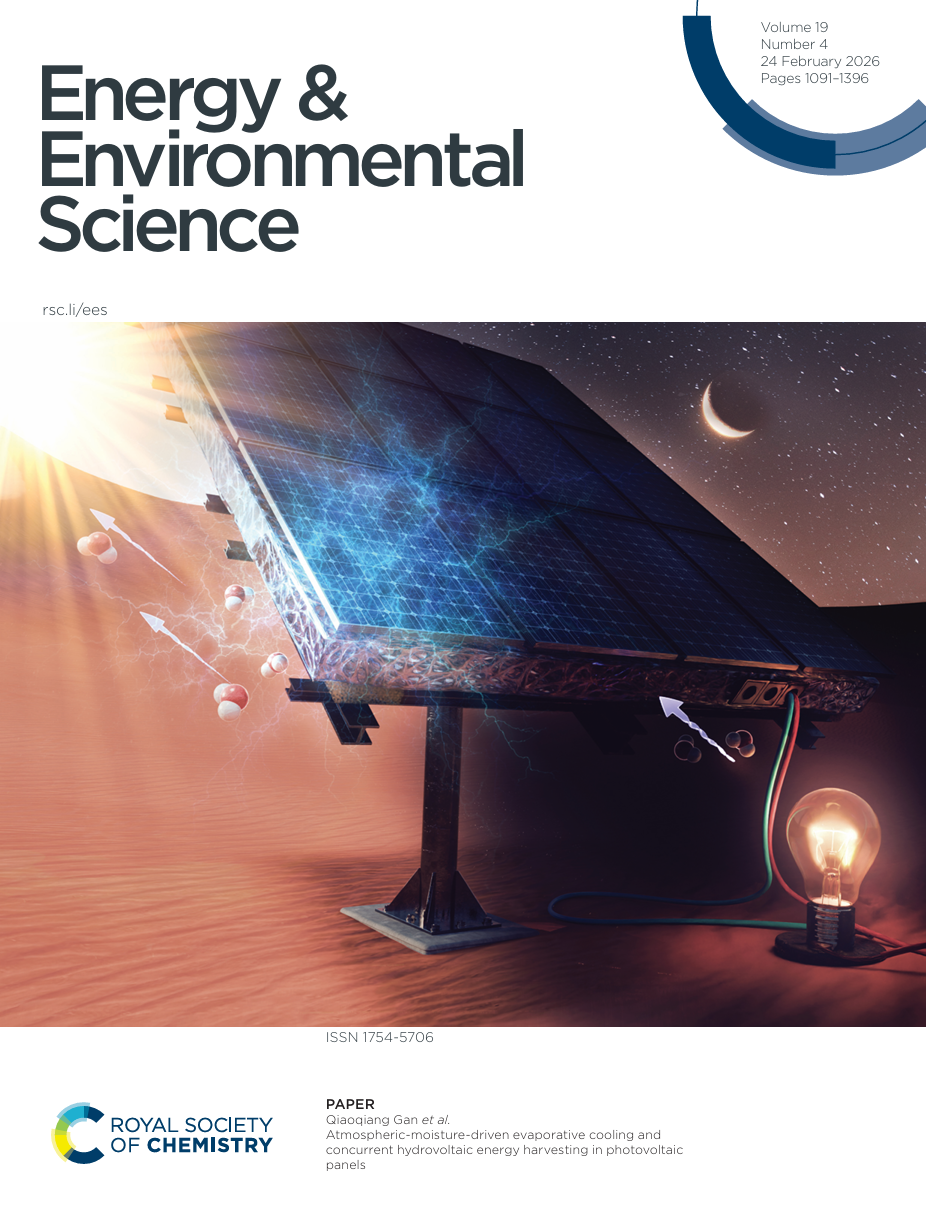
In this work, Qiaoqiang Gan and co-workers develop a hybrid photovoltaic–hydrovoltaic energy harvesting system that couples a moisture-driven hydrovoltaic device with photovoltaic panels using a hygroscopic hydrogel cooling layer. The hydrogel layer passively absorbs atmospheric moisture and provides evaporative cooling to reduce photovoltaic operating temperature, while simultaneously supplying water vapor to sustain hydrovoltaic electricity generation. By converting both ambient moisture and solar-induced waste heat into electrical energy, the integrated system enhances photovoltaic efficiency and enables continuous power generation for distributed electronics and Internet-of-Things devices.
Link: https://doi.org/10.1039/D5EE05530J
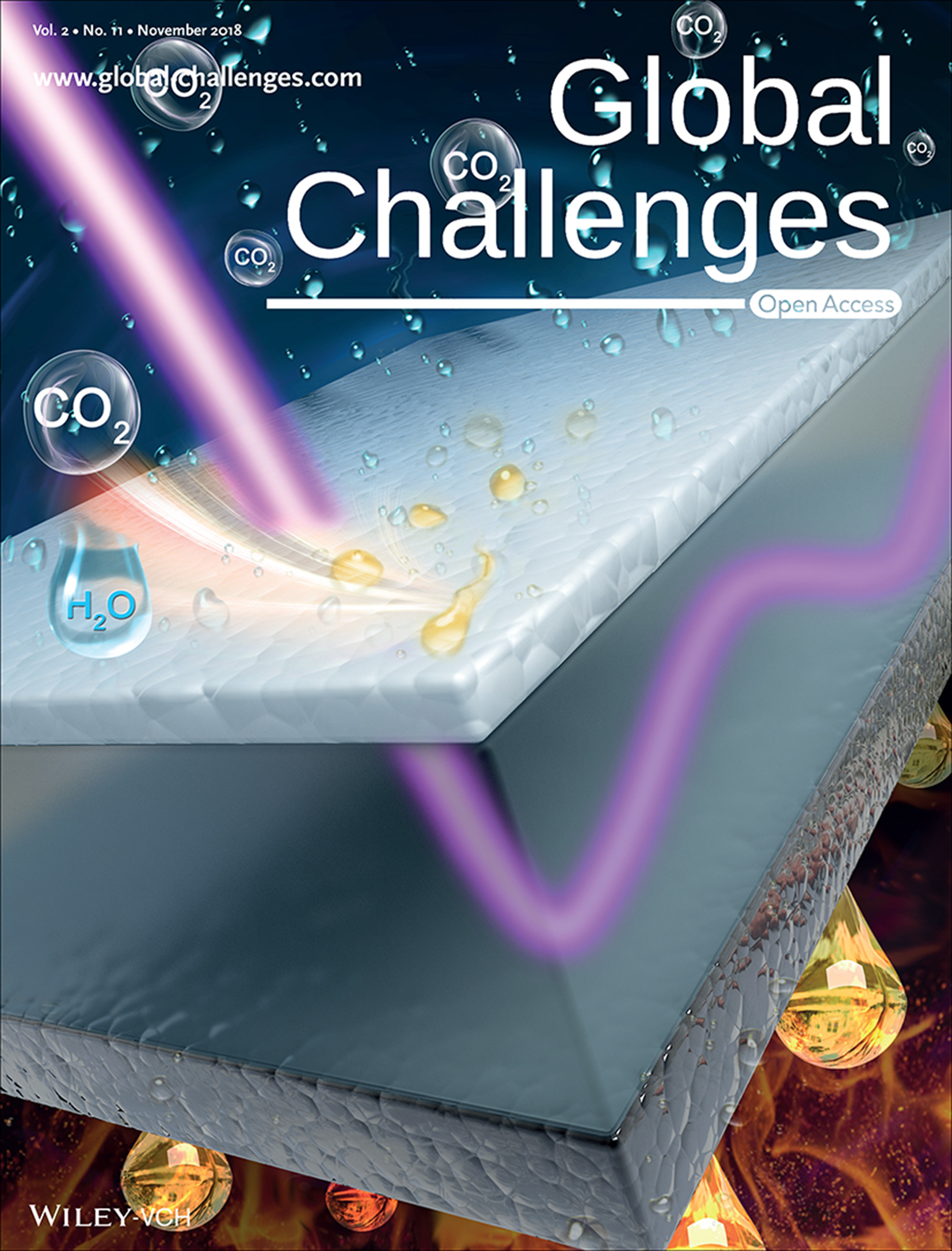
In this Research Article, Qiaoqiang Gan and co-workers develop a durable thermochromic hydrogel with a dual-network structure of hydroxypropyl cellulose (HPC) and polyacrylamide (PAAM), enhanced by calcium chloride (CaCl2) for tunable transition temperature. The results demonstrate the hydrogel's potential for scalable applications in vehicles, sustainable building facades, and greenhouse coverings, offering an energy-efficient, eco-friendly solution for thermal management.

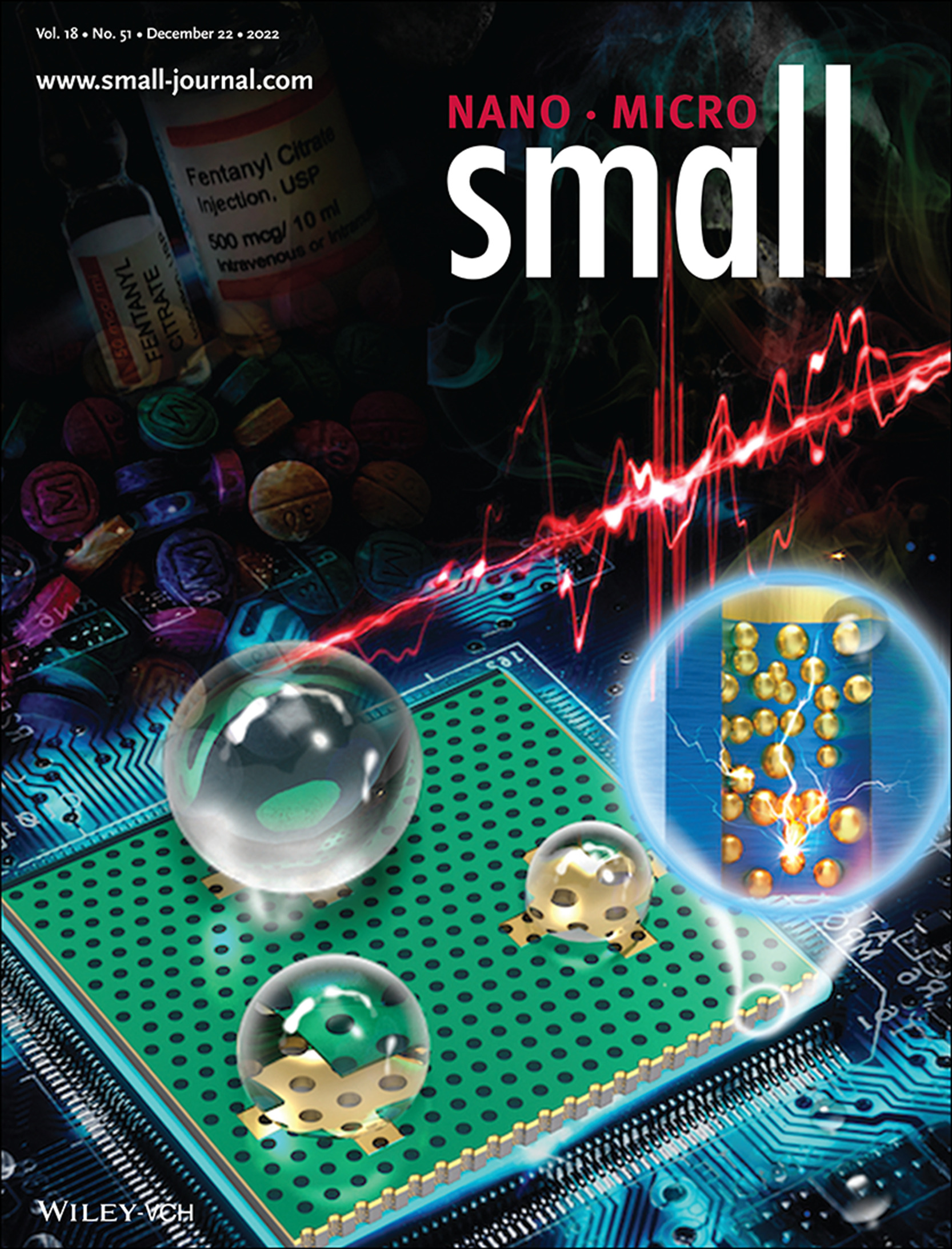
In this article, Qiaoqiang Gan and co-workers report a reproducible and sensitive surface-enhanced Raman spectroscopy (SERS) chip that combines three-dimensional-assembled gold nanoparticles on superhydrophobic nanoporous substrates. This chip can simultaneously realize strong localized field and analyte enrichment. It demonstrates good reproducibility for fentanyl and heroin detection, paving the way towards quantitative sensing of abused drugs and other chemicals.
Link: https://doi.org/10.1002/smll.202270280
Qiaoqiang Gan and colleagues have developed a "rainbow" trapping metasurface for on-chip spectrometers and sensors. They used a low-setting 4× optical microscope system with super-resolution image processing to achieve a biosensing resolution of 1.92 × 10⁹ exosomes per milliliter for A549-derived exosomes. The system can distinguish between patient samples and healthy controls using exosomal epidermal growth factor receptor (EGFR) expression values, demonstrating a new on-chip sensing system for personalized accurate bio/chemical sensing applications.
Link: https://doi.org/10.1016/j.eng.2022.03.018

.jpg?sfvrsn=e79a6482_0)
t7qu-qt.png?sfvrsn=baeb427e_0)
.jpg?sfvrsn=4b38f7a2_0)