
14 October, 2026
Extreme heat poses a growing challenge to electrical transmission systems. As ambient temperatures and solar radiation increase, overhead power conductors can reach their thermal limits more quickly, restricting the amount of electricity that can be safely transmitted through existing grid infrastructure.
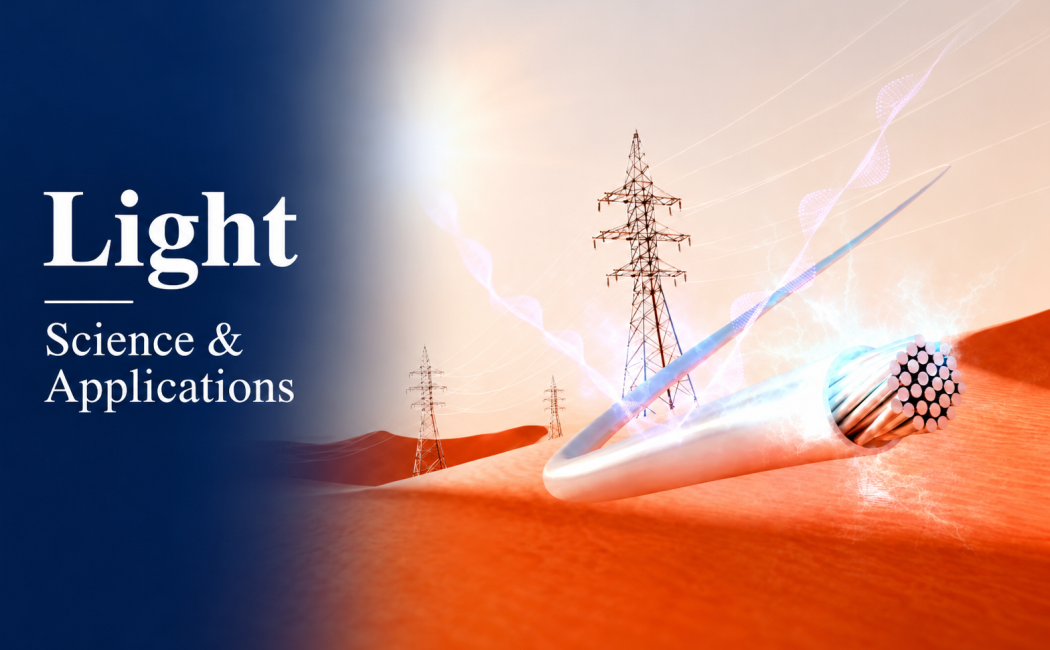
Researchers at King Abdullah University of Science and Technology (KAUST), led by Prof. Qiaoqiang Gan, have developed a high-thermal-conductivity radiative cooling (HTCRC) coating that can passively reduce the operating temperature of overhead power conductors and increase their current-carrying capacity, or ampacity, without consuming additional energy.
The coating combines strong reflection of incoming sunlight with efficient thermal emission in the mid-infrared range. It also provides enhanced thermal conductivity, helping heat generated inside the conductor spread efficiently toward the surface and dissipate into the surrounding environment.
“Overhead transmission lines are particularly vulnerable to extreme heat because their safe current-carrying capacity is ultimately limited by conductor temperature,” Prof. Gan explained. “Our goal was to develop a passive thermal-management strategy that can keep existing conductors cooler and allow the grid to transmit more electricity without requiring additional energy for cooling.”
The optimized coating achieved a solar reflectance of approximately 0.92, a mid-infrared emissivity of approximately 0.95, and an in-plane thermal conductivity of up to 1.28 W m⁻¹ K⁻¹. Outdoor experiments in Saudi Arabia showed that the HTCRC-coated cable was approximately 5 °C cooler than the bare cable and 15 °C cooler than the insulated cable, while thermal-rating analysis projected annual ampacity improvements of approximately 6–10% across representative hot-climate cities.
“The key advantage of this approach is that it works directly on the conductor and requires no external energy input,” said Kai Xu, the first author of the study and a postdoctoral researcher in Prof. Gan’s group. “By keeping existing power lines cooler, the technology could provide a practical way to increase transmission capacity and strengthen grid resilience in regions facing extreme heat and rapidly growing electricity demand.”
The team also investigated the durability and practical implementation of the coating, with the broader goal of developing a scalable solution for overhead transmission infrastructure. This could be particularly valuable in hot and arid regions, where peak electricity demand often coincides with the most severe thermal conditions for transmission lines.
More broadly, the work demonstrates how passive photonic thermal management could help existing power infrastructure adapt to rising temperatures while supporting growing electricity demand and the integration of renewable energy into the grid.
The study, titled “Photonic thermal management of overhead cables via high-thermal-conductivity radiative cooling,” was published in Light: Science & Applications.
Link: https://www.nature.com/articles/s41377-026-02485-1